Oleksandra Baidenko on Ledova’s Freeze-Dried Foods and International Market Opportunities
By Scott Douglas Jacobsen
Independent Journalist and DLH Coordinator
How is Ukrainian manufacturer Ledova developing freeze-dried food products for civilian consumers, military personnel, travellers and international business partners?
Interview Overview
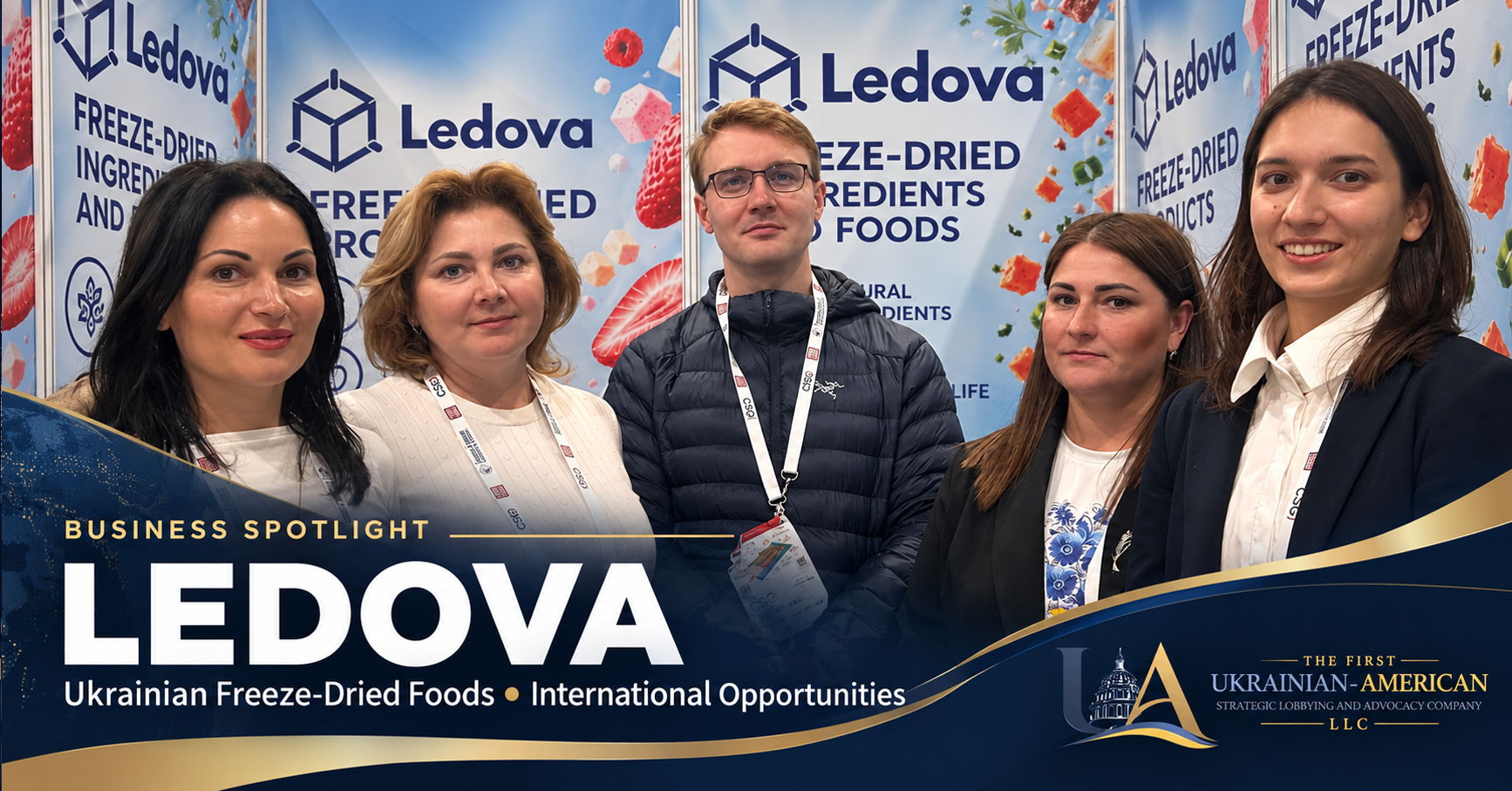
In an interview with Scott Douglas Jacobsen, Oleksandra Baidenko of Ledova introduces the Ukrainian company’s freeze-dried food products, production capabilities and plans to expand its presence in international markets. The discussion explores the company’s approach to preserving ingredients, developing convenient meals and supplying specialised food products to consumers and businesses.
The interview is part of an ongoing effort by The First Ukrainian-American Strategic Lobbying and Advocacy Company to introduce promising Ukrainian businesses to domestic and international audiences, strengthen professional connections and identify opportunities for cooperation between Ukrainian companies and potential partners abroad.
Ledova offers a diverse product range, including freeze-dried fruit, berries, prepared meals, soups, cereals, ingredients and freeze-dried ice cream. The company also works with specialised products such as aquafaba and provides opportunities for contract processing and private-label production.
Introducing Ledova
Scott Douglas Jacobsen: Please introduce yourself and explain your role at Ledova.
Oleksandra Baidenko: My name is Oleksandra Baidenko, and I represent Ledova, a Ukrainian company based in the Odesa region. I work with international sales and translation.
Products and Potential Markets
Jacobsen: Who are your primary customers, and what products do you offer?
Baidenko: We primarily produce food for consumers. Our most popular products include fruit snacks and freeze-dried ice cream.
We also offer porridges, soups and complete meals. At the same time, we are looking for distributors and opportunities to supply ingredients to other businesses.
Our products can be useful for military personnel, hikers, travellers and anyone who needs lightweight food that is easy to transport and can be stored without refrigeration. There are also potential applications aboard ships and submarines.
Beyond retail products, our production capabilities create opportunities to work with food manufacturers, distributors and other businesses interested in freeze-dried ingredients or customised products.
Ukrainian Ingredients and Product Quality
Jacobsen: What distinguishes your products from those offered by manufacturers in other countries?
Baidenko: Freeze-drying is used in Ukraine, Türkiye, China and many other countries, so the technology itself is not exclusive to Ukraine. However, we have received positive feedback about the quality of our products, including from German distributors.
For example, our strawberries retain an appearance close to that of the original fruit. We believe the quality of Ukrainian agricultural ingredients is one of our strengths.
We work with a wide range of ingredients, including rice, noodles, cereals, vegetables, meat, cheese and seafood. Our prepared meals include freeze-dried borscht, chicken soup, bean soup and other dishes.
This flexibility allows us to serve different customer needs, from convenient snacks to ingredients intended for further processing by other food businesses.
How Freeze-Drying Works
Jacobsen: How does the freeze-drying process work?
Baidenko: The process begins by freezing the product at very low temperatures before removing its moisture through drying. The formation of ice crystals matters because larger crystals can damage the structure of the food.
Our goal is to preserve the structure, flavour and nutrients of the original ingredients as much as possible. When water is added later, the product rehydrates.
Production times depend on the ingredient. Some products can be processed more quickly, while others require longer drying cycles. In general, the process can take approximately one or two days, depending on the product.
Applications in Military Logistics and Everyday Life
Jacobsen: Are your products primarily intended for military personnel or civilian consumers?
Baidenko: They are useful in both settings.
For military personnel, weight is particularly important. Soldiers may have to remain at remote positions for extended periods, and lightweight food is easier to transport and deliver, including by drone.
Another consideration is variety. Eating the same canned food every day can become difficult. We want to offer meals that, after adding hot water, taste close to food prepared in a kitchen.
There is also a psychological dimension. A familiar meal can provide a small sense of home, even in extremely difficult circumstances.
For civilian customers, the same characteristics are valuable for hiking, travelling and other situations where carrying fresh food is impractical. The packages are lightweight, easy to transport and convenient to prepare.
Fruit Snacks and Long-Term Storage
Jacobsen: Which products are particularly popular with civilian consumers?
Baidenko: Fruit snacks are especially popular, including among children.
For our plain fruit products, we freeze and dry the ingredients without adding sugar or preservatives. Customers can open the package and eat the fruit directly.
The products retain naturally occurring carbohydrates and fibre. Our range includes bananas, pineapple, strawberries, raspberries, apples and many other fruits and berries.
Depending on the product, the stated storage life can reach up to four years. This makes freeze-dried foods attractive for consumers looking for convenient snacks and products with an extended shelf life.
Aquafaba: An Ingredient for Food Manufacturers
Jacobsen: Do you produce any specialised ingredients beyond fruit and prepared meals?
Baidenko: One example is aquafaba, which is made from chickpea cooking liquid. It can replace egg white in suitable baking and confectionery recipes, including vegan products.
It can also be used in cocktails that traditionally rely on egg white to create foam. Aquafaba is useful because it can produce a stable foam in appropriate applications.
We sell this product to customers in Europe and America.
For food manufacturers and other businesses, specialised ingredients such as aquafaba represent another potential area for cooperation with Ledova.
Freeze-Dried Food and Space Applications
Jacobsen: Does the technology differ from the freeze-drying process used to prepare food for space missions?
Baidenko: The underlying process is essentially the same. The main differences concern the ingredients, products and requirements of the intended market.
Customers in different countries may have different preferences, but the fundamental technology remains the same.
Freeze-Dried Ice Cream
Jacobsen: How do you produce freeze-dried ice cream?
Baidenko: This is one of the questions people ask most frequently. The process relies on sublimation.
We take Ukrainian ice cream, cut it into cubes and freeze-dry it. The result is a lightweight, dry ice cream snack in pieces rather than powder. It can be eaten directly as a snack or sweet treat.
International Cooperation and Business Opportunities
Ledova’s product range demonstrates how Ukrainian food manufacturers can apply established technologies to develop products for different markets. From consumer snacks and prepared meals to specialised ingredients and contract processing, the company offers several potential avenues for commercial cooperation.
Its products may be relevant to food distributors, retailers, hospitality businesses, manufacturers and partners seeking lightweight meals, long-shelf-life ingredients or private-label production opportunities.
By introducing companies such as Ledova to Ukrainian and international audiences, The First Ukrainian-American Strategic Lobbying and Advocacy Company aims to help build professional connections, raise the international visibility of Ukrainian businesses and facilitate opportunities for collaboration.
About Oleksandra Baidenko
Oleksandra Baidenko works at Ledova LLC, a Ukrainian manufacturer of freeze-dried foods and ingredients based in Chornomorsk, Odesa region. Her responsibilities include international sales and translation.
About the Author
Scott Douglas Jacobsen is a Coordinator at Diplomatic Legal Hub and a Canadian journalist, publisher, editor and interviewer. His work explores diplomacy, law, human rights, science, secularism, culture and contemporary international affairs.