How U.S.–Ukraine Economic Cooperation Could Turn Critical Minerals into Jobs and Investment
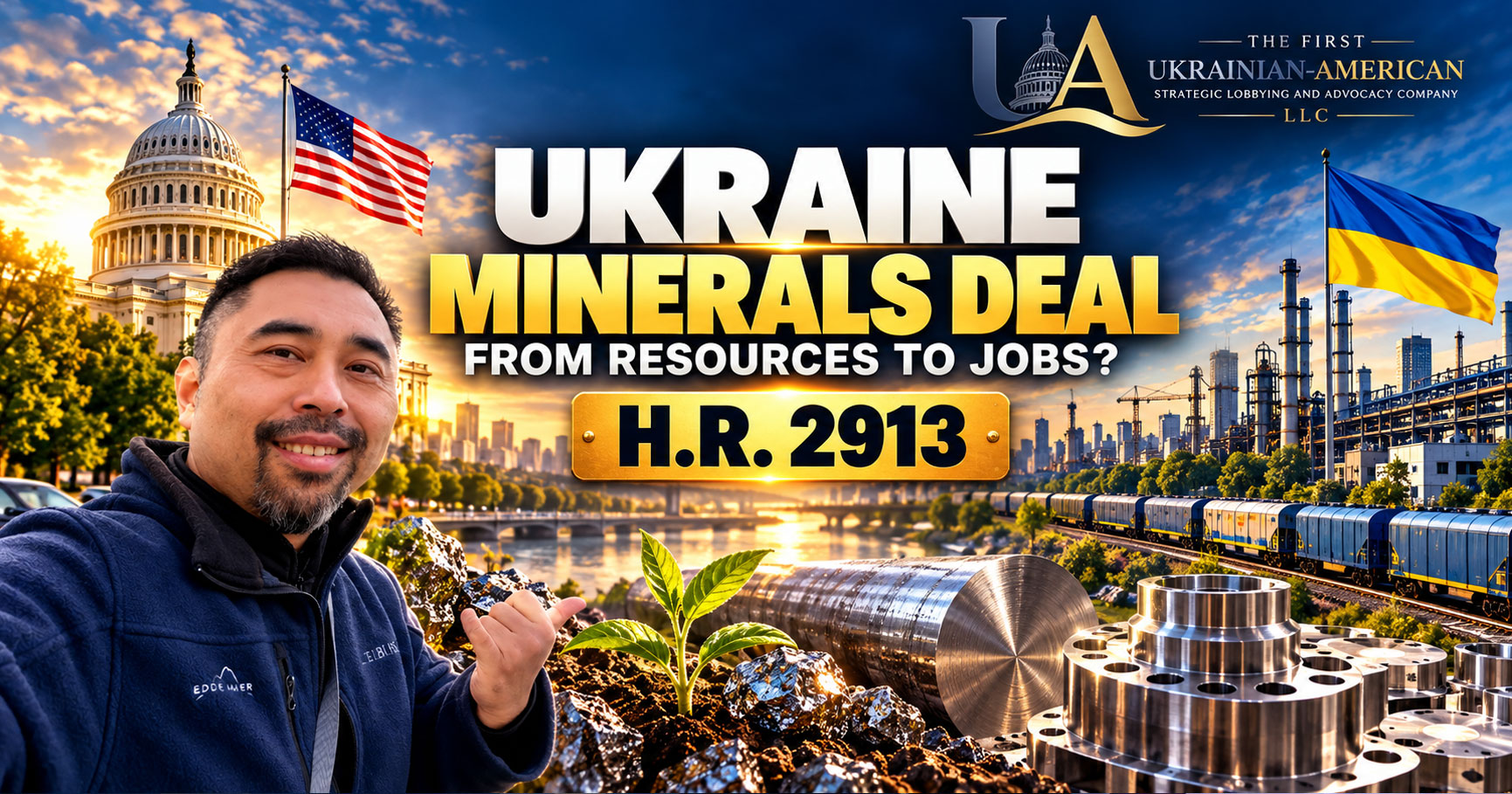
How can U.S.–Ukraine cooperation turn natural resources into productive businesses, skilled jobs, and better wages while creating commercial opportunities for American companies? In the spring episode of Between Capitals, Alex Chen examines this question through a hypothetical Ukrainian titanium machining business, connecting critical minerals, industrial development, investment risks, and U.S. policy.
Rather than focusing exclusively on immediate political developments, Chen makes the case for a long-term approach to bilateral cooperation—one that strengthens Ukraine’s industrial capacity, reinforces transatlantic security, and creates sustainable economic opportunities for both Ukrainian and American businesses.
Turning Titanium into Economic Opportunity
The episode follows a hypothetical machine workshop in western Ukraine that manufactures precision components from titanium and other metal alloys. Instead of waiting for large-scale mining and processing projects to become operational, the business could begin by purchasing qualified materials from established suppliers, securing customers, and building a skilled workforce.
This approach illustrates a broader economic principle: the value of natural resources extends beyond extraction. Processing, engineering, logistics, equipment maintenance, and finished-product manufacturing create interconnected business opportunities, generate tax revenue, and support higher-skilled employment.
Over time, additional stages of the supply chain could move into Ukraine as investment, infrastructure, and industrial capabilities expand. Chen also explores the longer-term prospect of rebuilding Ukraine’s lost industrial capacity through modern steel and alloy production, while emphasizing that such ambitions would require substantial capital, reliable infrastructure, and a durable security environment.
Financing Investment in a Country at War
Building a manufacturing business requires upfront investment in machinery, materials, energy, and wages—often long before customers begin paying for orders. In Ukraine, these ordinary commercial challenges are compounded by war-related risks, currency fluctuations, infrastructure disruptions, and uncertainty over when investors might be able to exit.
Chen compares the risks of investing in a Ukrainian industrial venture with alternative uses of capital, including U.S. Treasury securities and broad U.S. equity-market investments. His analysis highlights why simply promising higher returns may not be enough to attract financing.
Development finance institutions could help bridge this gap. The U.S. International Development Finance Corporation (DFC) can support eligible projects through loans, guarantees, equity investments, and political risk insurance. Participating Ukrainian banks could also provide a practical financing route for smaller businesses.
However, Chen identifies an implementation challenge: financing programs are only effective when businesses know they exist and can access them. Better communication, staff training, and referral mechanisms could help connect Ukrainian entrepreneurs with available support.
The U.S.–Ukraine Reconstruction Investment Fund (URIF), established under the April 2025 bilateral agreement, represents another potential source of support for eligible investment projects. Depending on the project’s structure and the institutions’ decisions, different financing mechanisms could support manufacturing, processing, or related energy infrastructure.
These are potential pathways, not guarantees of funding for the hypothetical workshop.
What H.R. 2913 Could Mean for Reconstruction
Chen examines three provisions of H.R. 2913, the Ukrainian Support Act, that could influence the broader framework for economic cooperation and reconstruction.
Section 104: DFC priorities. The provision would add Ukraine to DFC’s statutory priority framework. This could strengthen the policy basis for supporting eligible Ukrainian projects, although it would not guarantee financing, loan approval, or more favorable terms.
Section 107: Coordination of reconstruction. The bill proposes establishing a special coordinator for Ukrainian reconstruction within the U.S. Department of State. Better coordination could help align investment decisions with practical requirements such as reliable electricity, transport links, and other infrastructure needed for industrial production.
Section 110: Ukraine Reconstruction Trust Fund. The proposed fund would operate within the U.S. Treasury, with spending authority reserved for the Secretary of State and funding subject to congressional appropriations and applicable requirements. Unlike an investment vehicle focused on financial returns, it could support broader reconstruction, humanitarian needs, economic development, and accountable governance.
At the time of the episode, the House had passed H.R. 2913 on June 4, 2026, by 226 votes to 195. As of October 13, the bill remained on the Senate calendar awaiting further action. Its passage was uncertain, and both chambers would need to agree on the same legislative text before it could be presented to the president.
Chen stresses that advocacy and lobbying can play a practical role in this process. Effective engagement requires understanding which congressional offices and government institutions can address specific obstacles, developing credible proposals, and demonstrating how a policy change could benefit both countries.
Who Benefits from U.S.–Ukraine Economic Cooperation?
For Ukrainians, industrial investment could mean skilled employment, better wages, new supplier contracts, and opportunities to develop businesses around manufacturing facilities. Chen highlights the importance of creating pathways into these industries for veterans, veterans with disabilities, and internally displaced people who have lost their homes or livelihoods because of the war.
American companies could benefit as suppliers of machinery, components, technical expertise, and other services. Commercial buyers could also help Ukrainian manufacturers become dependable suppliers within U.S. and European supply chains through credible, long-term purchasing commitments.
Investment opportunities for individual Americans are a separate question. Chen discusses the hypothetical possibility of an exchange-traded fund providing exposure to reconstruction-related businesses, while emphasizing that no such retail investment product is established by the mineral agreement itself. Any future offering would need to meet applicable securities laws and listing requirements, and the risks of war exposure and illiquid industrial assets could make such a product impractical.
Ultimately, the benefits would depend on how projects are structured, who bears the financial risks, and whether economic gains reach workers and local businesses—not only investors.
Transparency, Accountability, and Long-Term Commitment
Chen argues that successful reconstruction requires more than financing agreements and political declarations. Ukraine needs transparent licensing, reliable contracts, fair competition, timely payments to suppliers, and mechanisms that allow workers to share in productivity gains.
The United States, meanwhile, needs dependable commitments, workable legislation, clear financing decisions, and effective oversight that can withstand political changes.
Even with institutional support and insurance, risks cannot be eliminated. Attacks can destroy equipment, power outages can disrupt production, and damaged infrastructure or lost shipments can jeopardize customer relationships. Investors may still suffer substantial losses.
These realities make a phased approach more credible: begin with a manageable operation, qualified materials, reliable customers, backup power, cash reserves, and alternative logistics routes. Expand only as sales, product quality, and financing justify additional investment.
Building Beyond Political Cycles
The central message of Between Capitals is that U.S.–Ukraine cooperation should be measured not only by immediate political decisions but also by the productive capacity it builds over years and decades.
Critical minerals can provide a starting point, but lasting economic value comes from the businesses, supply chains, infrastructure, and skilled workers that turn raw materials into finished products. H.R. 2913, the DFC, and URIF could each contribute to this broader objective, provided that the relevant policies are implemented effectively and projects meet the necessary requirements.
For Chen, the challenge is to translate strategic alignment into practical outcomes: competitive Ukrainian manufacturing, commercially viable partnerships, fair wages, transparent governance, and opportunities for American businesses.
The question is not simply how to finance Ukraine’s reconstruction, but how to build an industrial partnership capable of delivering shared benefits while managing the risks honestly and responsibly.
Alex Chen is the host of Between Capitals, where he examines the intersection of economics, geopolitics, business strategy, and U.S.–Ukraine relations. His perspective combines business and finance education at Rice University’s Jones Graduate School of Business, U.S. Army combat experience and service in Germany alongside NATO troops, and two to three years of advocacy for Ukraine on Capitol Hill.